
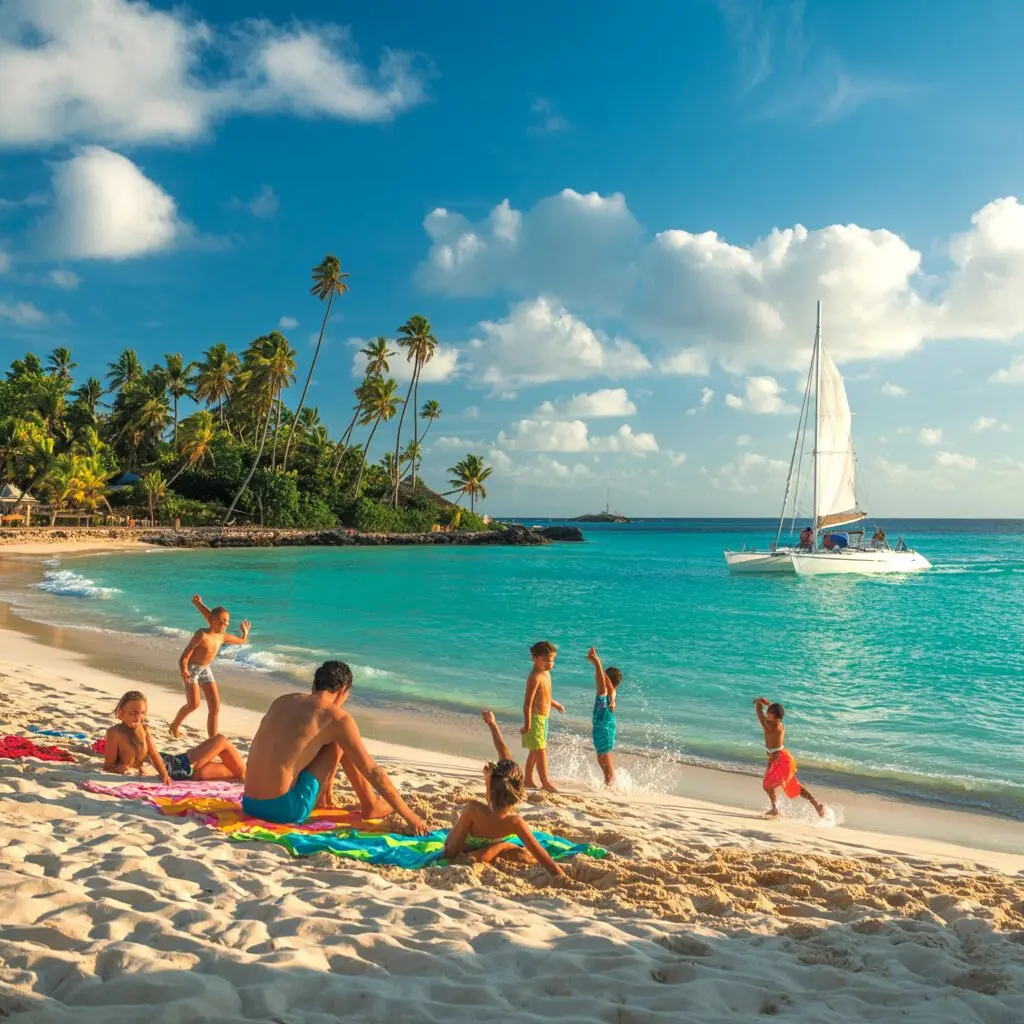
Aruba offers year-round sunshine with temperatures averaging 82°F (28°C) and sits outside the hurricane belt, making it one of the Caribbean’s most reliable vacation destinations. The best time to visit is April to August for lower prices, while December through April brings peak season with ideal weather. This Aruba travel guide covers everything from entry requirements and the ED Card to top attractions, beaches, budgeting, and practical tips for your trip.
Best Time to Visit Aruba
Aruba enjoys consistent 82°F (28°C) weather year-round with the dry season from December to April offering the best conditions, while April to August provides the best value with lower hotel rates. Unlike most Caribbean destinations, Aruba sits outside the hurricane belt, so there is no risk of direct hurricane hits even during the June-to-November Atlantic hurricane season.
The island experiences two main seasons. The dry season (December to April) brings the least rainfall, with monthly precipitation as low as 0.34 inches in March. The wetter months (October and November) see up to 3.70 inches of rain, but showers are typically brief and followed by sunshine.
Peak Season (December – April)
Peak season in Aruba runs from December to April, when temperatures average 81°F (27°C) and ocean waters hover between 79°F and 81°F (26-28°C). This period coincides with North American and European winter, driving the highest visitor numbers. Hotel rates increase 30-50% compared to summer months, and popular restaurants require reservations. The Aruba Carnival (January-February) draws additional visitors with colorful parades, live music, and cultural celebrations across the island.
Off-Season (September – November)
The off-season from September to November offers the most affordable Aruba vacation. Hotel rates drop significantly, and flights from major US cities can be 20-40% cheaper than peak season fares. Temperatures rise slightly to around 90°F (32°C), and brief rain showers become more frequent. Some restaurants and tour operators close for renovations during this period, but beaches remain open and uncrowded. Budget-conscious travelers who do not mind occasional rain find this the best time to visit Aruba.
Month-by-Month Weather Overview
| Month | Avg High (°F) | Avg Low (°F) | Rainfall (in) | Season |
|---|---|---|---|---|
| January | 86 | 76 | 1.55 | Peak |
| February | 87 | 77 | 0.81 | Peak |
| March | 88 | 77 | 0.34 | Peak |
| April | 89 | 78 | 0.46 | Shoulder |
| May | 90 | 80 | 0.64 | Shoulder |
| June | 90 | 80 | 0.74 | Summer |
| July | 90 | 80 | 1.25 | Summer |
| August | 91 | 80 | 1.02 | Summer |
| September | 91 | 80 | 1.79 | Off-season |
| October | 90 | 80 | 3.06 | Off-season |
| November | 88 | 78 | 3.70 | Off-season |
| December | 87 | 77 | 3.22 | Peak |
Getting to Aruba and entry requirements
US, Canadian, and EU citizens need a valid passport and must complete the online ED Card within 7 days before arrival – no visa is required for stays up to 30 days. Aruba’s entry process is straightforward compared to many Caribbean destinations, and the island actively welcomes tourists from around the world.
Most visitors arrive at Queen Beatrix International Airport (AUA), which receives direct flights from major US cities including Miami, New York, Atlanta, Houston, and Charlotte. Airlines serving Aruba include American Airlines, Delta, United, JetBlue, Southwest, and KLM for European connections. Flight times range from 2.5 hours from Miami to 5 hours from New York.
Aruba ED Card
The ED Card (Embarkation/Disembarkation Card) is a mandatory digital travel document that all visitors must complete before entering Aruba. The application is available online at edcardaruba.aw and must be filled out within 7 days before your arrival date. The ED Card is free of charge and includes personal information, travel details, and a customs declaration.
Completing the ED Card early in your trip planning ensures a smooth arrival process. After submission, you receive a confirmation email with a QR code that immigration officers scan upon arrival. For step-by-step instructions, see our ED Card application guide.
Passport and Visa Requirements
Visitors from the United States, Canada, the United Kingdom, and EU nations do not need a visa for tourist stays of up to 30 days in Aruba. Your passport must be valid for the duration of your stay. Citizens of other countries should check the Aruba government’s official requirements, as visa policies vary by nationality. A return or onward ticket is required for all visitors.
Top Things to Do in Aruba
Aruba’s top attractions include Eagle Beach (rated among the world’s best), Arikok National Park covering 20% of the island, snorkeling at vibrant coral reefs, and the historic capital Oranjestad. Despite being only 70 square miles, Aruba offers more than 40 named beaches and over 200 restaurants serving cuisine from nearly 100 nationalities.
Beaches
Aruba’s beaches are the island’s biggest draw. Eagle Beach consistently ranks among the world’s top beaches, known for its powdery white sand and iconic Divi Divi trees. Palm Beach is the hub for high-rise resorts, water sports, and nightlife, stretching for two miles along the northwest coast. Baby Beach in the southeast offers calm, shallow waters ideal for families with young children and beginner snorkelers. For a more secluded experience, Mangel Halto Beach provides excellent snorkeling in a mangrove-lined cove.
Arikok National Park
Arikok National Park covers approximately 20% of Aruba’s total land area and showcases the island’s rugged, desert-like interior. The park features hiking trails through cactus-studded landscapes, the Quadirikiri Cave with its natural light openings, and the Natural Pool (Conchi) – a rock formation sheltered from the ocean swells, accessible by 4×4 or guided jeep tour. Wildlife includes Aruban rattlesnakes, whiptail lizards, and numerous bird species.
Water Sports and Snorkeling
Aruba’s calm, clear waters make it a premier destination for snorkeling and diving. Boca Catalina and Malmok Beach offer easy shore-entry snorkeling with tropical fish and sea turtles. The Antilla shipwreck, a World War II German freighter, is one of the Caribbean’s largest wreck dives. Windsurfing and kitesurfing are popular at Fisherman’s Huts near Palm Beach, where consistent trade winds create ideal conditions from May to July.
Oranjestad and Culture
Oranjestad, Aruba’s capital, blends Dutch colonial architecture with Caribbean vibrancy. The downtown area features colorful buildings, the Fort Zoutman Historical Museum, and the Renaissance Marketplace for shopping. The nearby town of San Nicolas has emerged as the street art capital of the Caribbean, with murals covering entire building facades. Cultural experiences include visiting the Aruba Aloe Factory and learning about the island’s history at the Archaeological Museum of Aruba.
Where to Stay in Aruba
Palm Beach and Eagle Beach areas offer the widest range of resorts and hotels, while Oranjestad provides budget-friendly options and the low-rise area near Baby Beach suits travelers seeking tranquility. Aruba’s accommodation options span from luxury all-inclusive resorts to vacation rentals and boutique hotels.
The high-rise hotel area along Palm Beach features major brands like the Riu, Hyatt, Marriott, and Hilton, with rates ranging from $200-500 per night during peak season. The low-rise hotel area near Eagle Beach offers a more relaxed atmosphere with mid-range options from $150-350 nightly. Budget travelers can find guesthouses and Airbnb rentals in Oranjestad and residential neighborhoods for $60-120 per night.
Aruba Food and Dining
Aruba’s cuisine blends Dutch, Caribbean, and Latin American flavors – must-try dishes include keshi yena (stuffed cheese with spiced meat), fresh seafood at Zeerovers in Savaneta, and pastechi (deep-fried pastry pockets filled with cheese or meat) from local bakeries. The island’s nearly 100 nationalities create a remarkably diverse dining scene.
Restaurant prices range from $10-15 for casual local meals to $40-80 per person at upscale dining establishments. Popular food areas include Palm Beach for resort dining, downtown Oranjestad for a mix of local and international cuisine, and the fishing village of Savaneta for the freshest seafood. Tipping in Aruba follows North American standards, with 15-20% customary at sit-down restaurants.
Aruba Travel Budget – How Much Does It Cost?
A mid-range Aruba vacation costs approximately $150-250 per day per person including accommodation, meals, and activities – budget travelers can manage $80-120 daily by visiting during the off-season and choosing guesthouses over resorts. Aruba uses the Aruban florin (AWG), but US dollars are widely accepted throughout the island.
| Expense | Budget | Mid-Range | Luxury |
|---|---|---|---|
| Accommodation/night | $60-120 | $150-350 | $400-800+ |
| Meals/day | $25-40 | $50-80 | $100+ |
| Activities/day | $0-30 | $30-80 | $80+ |
| Transport/day | $10-15 | $15-40 | $40+ |
| Daily Total | $80-120 | $150-250 | $300+ |
Money-saving tips for Aruba include visiting during the off-season (September-November), booking accommodations with kitchenettes to prepare some meals, using the public bus system (Arubus) instead of taxis, and taking advantage of free activities like beach days and hiking in Arikok National Park.
Practical Tips and Do’s and Don’ts
Essential Aruba travel tips include wearing reef-safe sunscreen (it is legally required on the island), carrying cash for local buses and small vendors, renting a car for exploring beyond hotel areas, and respecting the island’s water conservation efforts. Aruba has one of the Caribbean’s most advanced desalination plants, producing clean tap water that is safe to drink.
Do’s:
- Do apply reef-safe sunscreen – regular sunscreen damages coral reefs and is banned in Aruba
- Do rent a car if you want to explore Arikok National Park and remote beaches
- Do try local dishes like keshi yena and fresh fish at Zeerovers
- Do carry some cash (US dollars work everywhere) for small purchases
- Do tip 15-20% at restaurants – service workers depend on tips
- Do drink tap water – Aruba’s desalinated water is safe and high quality
Don’ts:
- Don’t leave valuables unattended on beaches – use hotel safes
- Don’t swim at unguarded beaches with strong currents (especially the north coast)
- Don’t forget to complete your ED Card at edcardaruba.aw before arrival
- Don’t assume all businesses accept credit cards – carry cash for local spots
- Don’t underestimate the sun – UV index regularly reaches 10+ even on cloudy days
Aruba Safety Information
Aruba is considered one of the safest Caribbean islands with a low crime rate, but standard travel precautions apply – avoid leaving belongings unattended on beaches and use hotel safes for valuables and passports. The island has a stable government as part of the Kingdom of the Netherlands and maintains a professional police force.
Health considerations include strong sun exposure (pack SPF 50+ and a hat), minimal mosquito presence due to constant trade winds, and the availability of modern medical facilities at Dr. Horacio Oduber Hospital in Oranjestad. The emergency number in Aruba is 911, the same as in the United States. Tap water is safe to drink throughout the island.
For natural hazards, Aruba sits outside the hurricane belt, so tropical storms rarely cause significant damage. Some north-coast beaches have strong currents and are not suitable for swimming – always check conditions and swim at guarded beaches.
Frequently Asked Questions
What currency does Aruba use?
Aruba uses the Aruban florin (AWG), but US dollars are accepted everywhere on the island. Most businesses accept credit cards, though carrying some cash is recommended for small vendors, local buses, and tipping.
What language is spoken in Aruba?
The official languages are Papiamento and Dutch, but English is widely spoken throughout the island, especially in tourist areas. Spanish is also commonly understood.
Can you drink tap water in Aruba?
Yes – Aruba’s tap water is safe to drink. The island operates one of the world’s largest desalination plants, producing high-quality drinking water. This saves money and reduces plastic bottle waste.
Do I need a car in Aruba?
A car is not required if you plan to stay in the Palm Beach or Eagle Beach hotel areas, where taxis and the Arubus public bus system are available. However, renting a car is recommended if you want to explore Arikok National Park, Baby Beach, and other attractions outside the main tourist zone.
Is Aruba safe for tourists?
Yes – Aruba has one of the lowest crime rates in the Caribbean. Standard precautions like using hotel safes and not leaving belongings unattended on beaches are sufficient for most visitors.
What is the drinking age in Aruba?
The legal drinking age in Aruba is 18 years old.
Are there mosquitoes in Aruba?
Mosquitoes are relatively rare in Aruba compared to other Caribbean islands due to the constant trade winds and low rainfall. However, bringing insect repellent is still advisable, especially during the wetter months.
Is Aruba outside the hurricane belt?
Yes – Aruba is located approximately 15 miles north of Venezuela and sits well outside the Atlantic hurricane belt. While the official hurricane season runs June through November, Aruba has never been directly hit by a hurricane.
What are the best beaches in Aruba?
Eagle Beach is consistently rated among the world’s best beaches for its white sand and Divi Divi trees. Palm Beach offers the best combination of resorts, restaurants, and water sports. Baby Beach is ideal for families due to its calm, shallow waters.
How far in advance should I complete the Aruba ED Card?
The ED Card must be completed online at edcardaruba.aw within 7 days before your arrival date. It is recommended to fill it out as soon as your travel dates are confirmed to avoid last-minute issues.
—
Last updated: June 2026. The arubaedcard.info editorial team specializes in Aruba travel documentation and planning. Our team monitors official sources including [aruba.com](https://www.aruba.com), [edcardaruba.aw](https://edcardaruba.aw), and [U.S. State Department travel advisories](https://travel.state.gov) to keep this guide current. Weather data sourced from the National Climatic Data Center. For entry document requirements, visit our [ED Card guide](/ed-card-application/).